
Tech
MyHeritage Library Edition: A Complete Guide to Free Family History Research

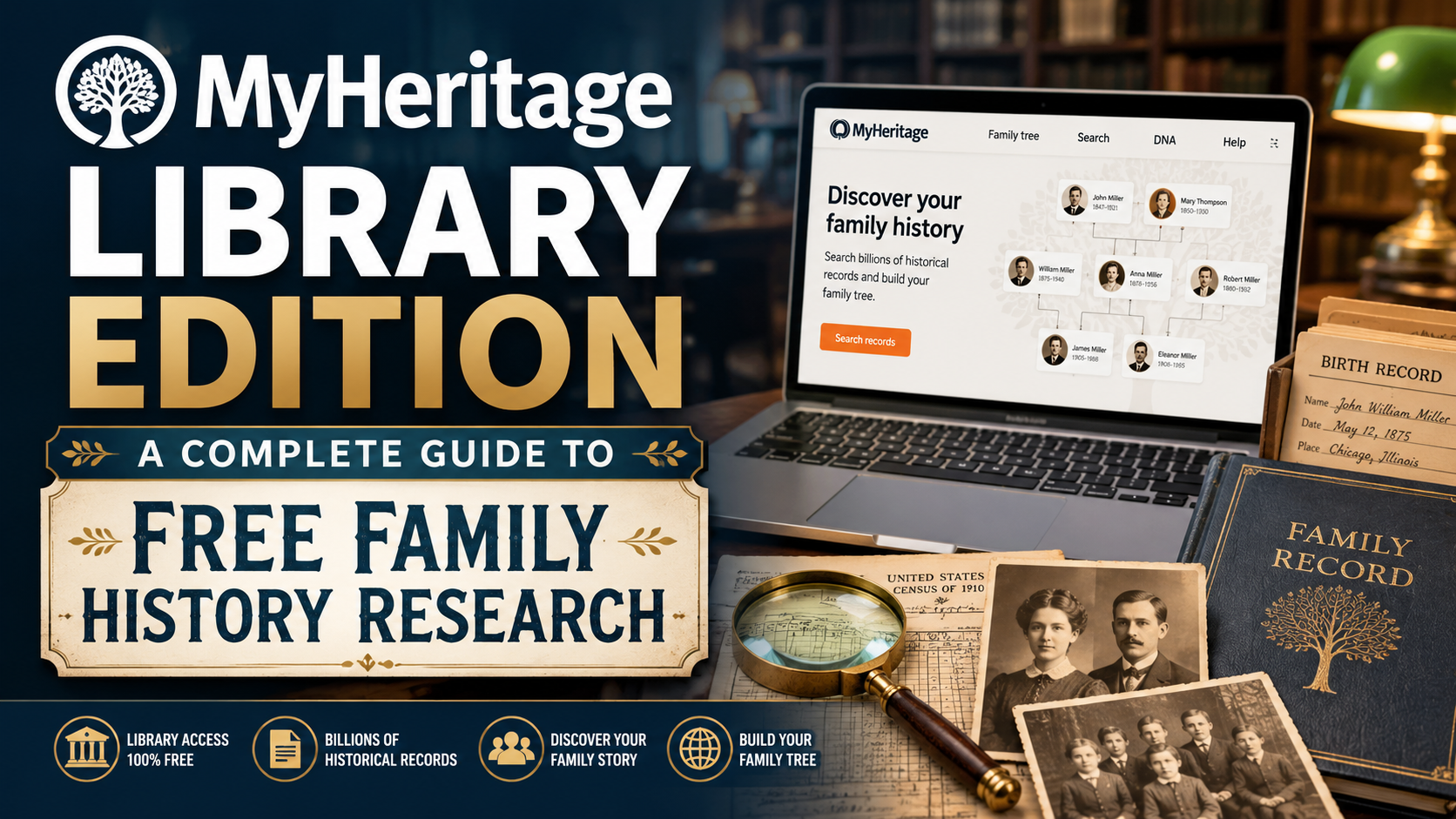
Tracing your family history has become easier than ever, thanks to the growing number of digital genealogy resources available today. Among them, MyHeritage Library Edition stands out as a valuable tool that gives library visitors access to billions of historical records, family trees, newspapers, and other genealogy collections without requiring a personal subscription. Designed specifically for use through participating libraries and educational institutions, it helps researchers, students, and family historians explore their ancestry using trusted historical sources.
This guide explains everything you need to know about MyHeritage Library Edition, including how it works, who can access it, the features it offers, and how it differs from a standard MyHeritage subscription. Whether you’re just beginning your family history journey or looking for additional genealogy resources, this article will help you understand how to make the most of this powerful research tool.
Quick Overview
| Feature | Details |
|---|---|
| Service Name | MyHeritage Library Edition |
| Developer | MyHeritage |
| Purpose | Family history and genealogy research |
| Access Method | Available through participating libraries, archives, and educational institutions |
| Primary Users | Genealogists, students, historians, researchers, and library visitors |
| Main Resources | Historical records, family trees, newspapers, census data, birth, marriage, and death records |
| Subscription Required? | No personal subscription is required when accessing through a participating library |
| Best For | Researching family history and discovering ancestral records |
| Availability | Offered by participating libraries in many countries |
| Official Website | MyHeritage Library Edition via participating libraries |
What Is MyHeritage Library Edition?
MyHeritage Library Edition is a specialized version of the MyHeritage genealogy platform created for libraries, archives, universities, and other educational institutions. Instead of purchasing an individual subscription, users can access the service through participating libraries, giving them the opportunity to search billions of historical records and family history resources at no personal cost while using the library’s access. It is designed to make genealogy research more accessible for anyone interested in learning about their ancestors.
The platform includes an extensive collection of family trees, census records, birth, marriage, and death records, immigration documents, newspapers, military records, and other historical databases gathered from countries around the world. By bringing these resources together in one searchable platform, MyHeritage Library Edition helps researchers save time and uncover connections that might otherwise be difficult to find. Whether you are building a family tree for the first time or verifying historical information, it provides a reliable starting point for family history research.
Who Can Use MyHeritage Library Edition?
MyHeritage Library Edition is available to anyone who visits a library or institution that subscribes to the service. Public libraries, university libraries, archives, and genealogy centers in many countries provide access to their members or on-site visitors. In most cases, users do not need to purchase a separate MyHeritage subscription because the library’s institutional license provides access while they are using the library’s network or authorized computers.
The platform is useful for a wide range of people, including family historians, students, professional genealogists, historians, and anyone curious about their ancestry. Beginners can use it to start building a family history, while experienced researchers can search historical documents to verify dates, trace family connections, or discover new records. Before visiting, it is a good idea to check with your local library to confirm whether it offers MyHeritage Library Edition and to learn about any access requirements or usage policies.
Key Features Available to Library Users
One of the biggest advantages of MyHeritage Library Edition is the wide range of genealogy resources it brings together in a single platform. Library users can search billions of historical records from around the world, including census data, birth, marriage, and death records, immigration documents, military records, newspaper archives, and public family trees. The powerful search tools make it easier to locate ancestors by entering names, locations, or approximate dates, helping researchers uncover information that might otherwise require searching multiple databases.
In addition to its extensive record collection, the platform is designed to simplify family history research. Users can compare records from different countries, explore historical documents, and discover possible family connections through a searchable interface. Because the content is regularly updated as new collections become available, researchers benefit from access to an expanding archive of genealogical information. These features make MyHeritage Library Edition a valuable resource for both beginners starting their family tree and experienced genealogists conducting detailed historical research.
How to Access MyHeritage Library Edition
Accessing MyHeritage Library Edition is usually straightforward, provided your local library or educational institution has an active subscription. Start by checking your library’s website or asking a librarian whether the service is available. Many participating libraries offer access through computers inside the library, while some institutions also provide remote access for registered members, depending on their licensing agreement.
Once access is available, simply open the library’s genealogy resources page or follow the link provided by the institution. In most cases, you do not need to purchase a personal MyHeritage subscription because access is included through the library. After opening the platform, you can begin searching historical records, family trees, newspapers, and other genealogy collections immediately. If you’re unsure about the process, library staff can often provide guidance on how to use the database and get the best results from your research.
What Makes It Different From a Personal MyHeritage Subscription?
Although MyHeritage Library Edition and a personal MyHeritage subscription both provide access to extensive genealogy resources, they are designed for different purposes. The Library Edition focuses on research by giving users access to a vast collection of historical records and public family trees through participating libraries. It is ideal for people who want to explore their ancestry without paying for an individual subscription, especially when conducting research during a library visit.
A personal MyHeritage subscription, on the other hand, is intended for users who want to manage their own family tree and use additional features outside the library environment. Subscribers can create and expand private family trees, upload photos, preserve family documents, and access personalized tools that may not be available through the Library Edition. While both versions share the same goal of helping people discover their family history, the Library Edition emphasizes research access, whereas a personal subscription offers a more complete experience for those who want to build and maintain their own genealogy projects over time.
Best Ways to Use It for Genealogy Research
To get the most from MyHeritage Library Edition, begin with the information you already know. Enter the full names of relatives, approximate birth or death dates, and locations where family members lived. Even small details can help narrow search results and uncover historical records that might otherwise be overlooked. As you find new documents, compare them with existing family information instead of relying on a single record to confirm relationships or important dates.
Another effective approach is to search multiple record collections rather than stopping after the first result. Census records, immigration documents, newspapers, military records, and vital records often complement one another and provide a more complete picture of an ancestor’s life. Keeping organized notes and recording the source of each discovery also makes future research easier. By combining information from several reliable records, MyHeritage Library Edition can become a valuable tool for building a well-documented and accurate family history.
Limitations You Should Know Before Using It
While MyHeritage Library Edition is an excellent resource for genealogy research, it is important to understand its limitations before getting started. Access depends on whether your local library or institution has an active subscription, so not everyone can use the service immediately. In many cases, access is limited to library computers or authorized library networks, although some institutions may also offer remote access to registered members. The available features can also vary depending on the library’s licensing agreement.
Another point to remember is that no genealogy database is completely comprehensive. Some historical records may be missing, incomplete, or unavailable because they have not yet been digitized or are restricted by local privacy laws. Search results may also contain transcription errors or records with similar names, making it important to verify information using multiple sources whenever possible. Treating MyHeritage Library Edition as one part of a broader research strategy will help you build a more accurate and reliable family history.
Is MyHeritage Library Edition Worth Using?
For anyone interested in exploring their family history, MyHeritage Library Edition is a valuable research tool. It provides access to an extensive collection of historical records, family trees, newspapers, and genealogy databases that would otherwise require a paid subscription. Because the service is available through participating libraries, users can benefit from professional-grade research resources without the cost of an individual membership, making it an excellent option for beginners and experienced genealogists alike.
Whether it is the right choice depends on your research goals. If you mainly want to search historical records, verify family connections, or gather information for a genealogy project, the Library Edition offers more than enough resources to get started. If you plan to build a detailed online family tree, store personal photos, or use advanced account features over the long term, a personal MyHeritage subscription may be a better fit. For many researchers, however, MyHeritage Library Edition is an outstanding starting point that combines accessibility, reliability, and an impressive collection of historical records in one easy-to-use platform.
Conclusion
MyHeritage Library Edition makes family history research more accessible by giving library users access to billions of historical records and genealogy resources without requiring a personal subscription. Whether you are tracing your ancestry for the first time or expanding an existing family tree, the platform offers reliable tools to support your research. While it has some limitations compared with a personal subscription, its extensive record collections, user-friendly search features, and library-based access make it a valuable resource for anyone interested in discovering and preserving their family history.
FAQs About MyHeritage Library Edition
Is MyHeritage Library Edition free to use?
Yes. MyHeritage Library Edition is free for users who access it through a participating library, archive, or educational institution. You do not need to purchase a personal subscription while using the library’s licensed access.
Can I use MyHeritage Library Edition from home?
It depends on your library’s policy. Some participating libraries offer remote access to registered members, while others require you to use the service on library computers or through the library’s network.
What records can I search in MyHeritage Library Edition?
The platform provides access to billions of genealogy records, including census records, birth, marriage, and death records, immigration documents, military records, newspaper archives, and public family trees.
Can I build my own family tree with MyHeritage Library Edition?
The Library Edition is primarily designed for research and access to historical records. Features for creating and managing a personal family tree are more comprehensive with a personal MyHeritage subscription.
How do I know if my local library offers MyHeritage Library Edition?
Visit your library’s website or contact a librarian to check whether it has a subscription. Many public libraries, universities, and genealogy centers list their online research databases and genealogy resources on their websites.


Who Was Patrick Leno? Jay Leno’s Brother, Military Career, Family, and Legacy

Who Is Nicole Plotzker? Dr. Dre’s Ex-Wife, Children, Divorce Settlement, and Private Life

Who Is Jennifer Hageney? Andrew Shue’s Ex-Wife, Floral Design Career, Sons, and Private Life

Alix Earle Tom Brady Rumors: Dating Timeline, Party Sightings, and What We Know

Who Is Michael Galeotti? Bethany Joy Lenz’s Ex-Husband, Enation Career, Marriage, Daughter, and Private Life

Who Is Aaron Kendrick De Niro? Airyn De Niro’s Family, Identity, Career Goals, and Private Life

Who Is Lee Mack? Not Going Out, The 1% Club, Wife, Comedy Career, and Net Worth

Charlie Sheen Net Worth: How TV Millions, Taxes, and Personal Costs Reshaped His Fortune

Who Is Katherine Sanborn? Stanford Psychiatrist, Phil Hellmuth’s Wife, and Family Life

Who Is Linda Bazalaki? Miss Uganda 1993, Healthcare Career, Marriage, and Life Beyond Pageantry
Who Was Patrick Leno? Jay Leno’s Brother, Military Career, Family, and Legacy
Who Is Nicole Plotzker? Dr. Dre’s Ex-Wife, Children, Divorce Settlement, and Private Life
Who Is Jennifer Hageney? Andrew Shue’s Ex-Wife, Floral Design Career, Sons, and Private Life
Alix Earle Tom Brady Rumors: Dating Timeline, Party Sightings, and What We Know
Who Is Michael Galeotti? Bethany Joy Lenz’s Ex-Husband, Enation Career, Marriage, Daughter, and Private Life
Who Is Aaron Kendrick De Niro? Airyn De Niro’s Family, Identity, Career Goals, and Private Life
Who Is Lee Mack? Not Going Out, The 1% Club, Wife, Comedy Career, and Net Worth
Charlie Sheen Net Worth: How TV Millions, Taxes, and Personal Costs Reshaped His Fortune
Who Is Katherine Sanborn? Stanford Psychiatrist, Phil Hellmuth’s Wife, and Family Life
Who Is Linda Bazalaki? Miss Uganda 1993, Healthcare Career, Marriage, and Life Beyond Pageantry
-

 Health3 months ago
Liver Problem Symptoms in Females, Early Signs, Warning Signs, and When to See a Doctor
-
 Celebrity3 months ago
Who Is Tom Burstall? Inside the Career of Australian Film’s Quiet Force
-

 Celebrity3 months ago
List of D List Celebrities: 15 Reality Stars and Pop-Culture Personalities People Still Recognise
-
 Celebrity3 months ago
Ashley Underwood: Her Career, Marriage to Larry David, and Estimated $1 Million Net Worth