
Celebrity
Matilda Kent Tarleton: The Remarkable Educator Who Faced Loss and Raised Bob Barker

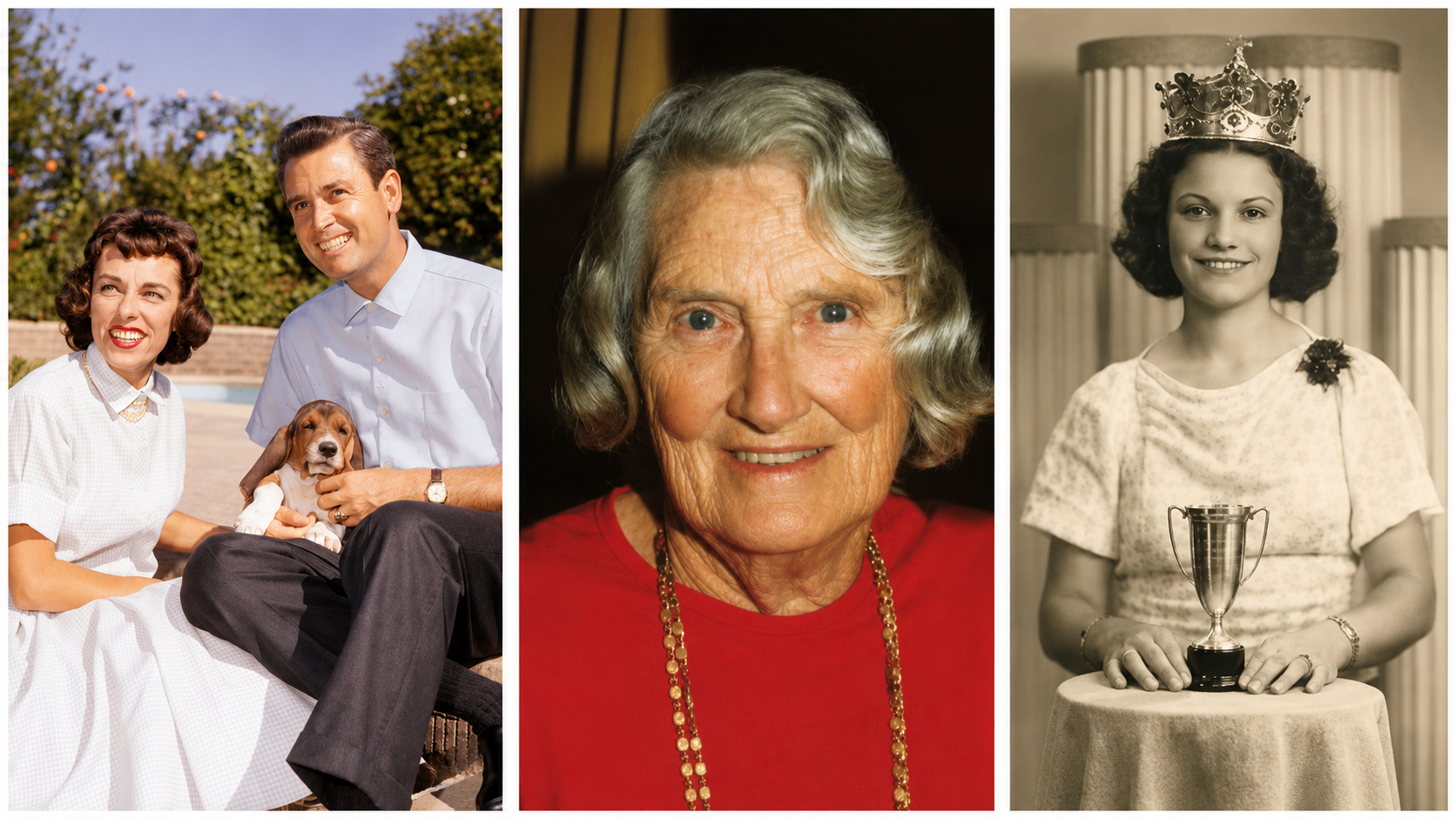
Matilda Kent Tarleton was an American educator, school administrator, author, and the mother of longtime television host Bob Barker. Although her name is now most often searched through her famous son, she built a meaningful professional identity of her own. Matilda graduated from Dakota Wesleyan University in 1918, later served as Todd County Superintendent of Schools, and wrote Our State, a South Dakota history book created for sixth-grade students.
Her life combined education, motherhood, writing, leadership, and resilience during periods of personal change. This article looks beyond celebrity-family references to examine Matilda Kent Tarleton’s documented achievements while carefully addressing the conflicting dates, locations, and family details repeated across online records.
Matilda Kent Tarleton at a Glance
| Detail | Available Information |
|---|---|
| Full name | Matilda Kent Tarleton |
| Commonly known as | Tillie |
| Later names | Matilda Barker and Matilda Valandra |
| Birth date | October 18, 1897 |
| Birthplace | New York, with the exact locality disputed |
| Death | February 1989 in Los Angeles County, California |
| Profession | Teacher, school administrator, and author |
| Education | Dakota Wesleyan University |
| Graduation year | 1918 |
| Major role | Todd County Superintendent of Schools |
| Published work | Our State |
| First husband | Byron John Barker |
| Second husband | Louis Valandra |
| Children | Bob Barker and Kent Valandra |
| Net worth | No authoritative figure documented |
Matilda Kent Tarleton’s 1897 birth year and February 1989 death are consistently reported, but some genealogical records disagree about her precise birthplace and whether she died on February 20 or February 26. Her exact wealth, salary, cause of death, and complete financial history were not authoritatively documented.
Who Was Matilda Kent Tarleton Beyond Being Bob Barker’s Mother?
Matilda Kent Tarleton is usually introduced as the mother of Bob Barker, whose television career kept the family name in public memory. That connection is important, but it does not fully represent her own achievements. Long before her son became famous, she had established herself in education through teaching, school administration, writing, and community leadership.
Matilda Kent Tarleton served as Todd County Superintendent of Schools and wrote Our State, a history book prepared for young students in South Dakota. Her university background also included debate, student leadership, and participation in literary activities, showing that communication and education were central interests throughout her life.
She should not be exaggerated into a nationally famous historian or major public intellectual. Her documented influence was mainly regional, particularly within South Dakota schools and her family environment. Her story belongs not only in a celebrity biography, but also in the history of early twentieth-century women who built meaningful careers in education.
Early Life and the Tarleton Family Background
Matilda Kent Tarleton was born on October 18, 1897, in New York, although historical and genealogical records do not fully agree on the exact locality. Some sources list Durham, others identify Eminence, while several records mention only the state. The broader birth information is therefore more dependable than any single town claim.
Her parents were Reverend Robert Ekler Tarleton and Mary Elizabeth Kent. Her father served Methodist congregations in several South Dakota communities, including Garretson, Mellette, Springfield, Arlington, Miller, and Hot Springs. The family’s movement between these locations likely exposed Matilda Kent Tarleton to different schools, churches, and local communities.
This religious and educational background provides useful context for her later career. However, dependable records reveal little about her childhood emotions, family wealth, sibling relationships, or private home life. Those gaps should be acknowledged rather than filled with invented stories.
Dakota Wesleyan and the Education That Shaped Her Career
After completing her studies at Arlington High School, Matilda Kent Tarleton attended Dakota Wesleyan University and graduated in 1918. Her university years were not limited to classroom study. She focused on biology and German, participated in the Philomathean Literary Society, competed in intercollegiate debate, and became a member of the Pi Kappa Delta forensic fraternity.
Matilda Kent Tarleton also served as vice president of the university’s Students’ Association. Completing higher education and holding campus leadership roles during the 1910s was a meaningful achievement for a young woman at that time. Debate and literary activities would have strengthened her communication, organisation, and public-speaking skills, all of which were useful in education.
Her exact grades, professors, private correspondence, and unverified honours are not publicly established. The available record instead shows a well-rounded student whose academic training and leadership experience prepared her for a career in teaching and school administration.
From Classroom Teacher to Educational Leader
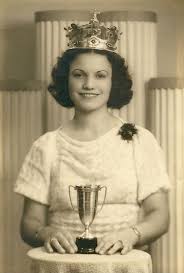
Following graduation, Matilda Kent Tarleton entered education and worked as a schoolteacher before taking on broader administrative responsibilities. Public records later identify her as Todd County Superintendent of Schools, showing that her career developed beyond direct classroom instruction.
A teacher works closely with students through lessons, assessment, discipline, and daily academic support. A county superintendent may oversee a wider educational system, including school records, teacher needs, curriculum planning, local policies, and communication between communities and school officials. The position requires organisation, judgement, and an understanding of how schools operate beyond a single classroom.
Matilda Kent Tarleton’s movement into administration suggests that she earned professional trust and gained substantial experience in education. However, her exact salary, full employment timeline, every school where she worked, and personal leadership methods are not completely documented.
Her career is therefore best understood as a progression from teaching individual students to accepting responsibility for education across a larger region.
Teaching and Leadership in Todd County
Matilda Kent Tarleton’s career became closely connected with Todd County and the educational environment surrounding the Rosebud Reservation. She worked as a teacher in Mission, South Dakota, where her son Bob Barker also attended school. Her later role as Todd County Superintendent of Schools reflected a broader level of responsibility within the local education system.
Rural schools often faced practical difficulties involving long travel distances, limited resources, uneven access, and the need to serve communities with different backgrounds and educational needs. Working in this setting required more than classroom instruction. It also involved planning, communication, record-keeping, and attention to local conditions.
The Rosebud community should not be treated merely as a setting in Bob Barker’s childhood. It was a distinct cultural and educational environment with its own history. Matilda Kent Tarleton’s superintendent position was a genuine professional achievement, not an honorary title, even though the full details of her daily work remain limited.
Our State and Her Contribution to South Dakota Education
One of Matilda Kent Tarleton’s most important independent achievements was the publication of Our State in 1937. Written under the name Matilda Tarleton Barker, the book presented the history of South Dakota for sixth-grade students and was reportedly used in state classrooms for many years.
Creating a history book for children requires more than gathering names and dates. The author must decide which events are most important, organise them clearly, simplify complex subjects, and use language appropriate for young readers. This made Our State both an educational resource and an example of Matilda Kent Tarleton’s experience as a teacher and administrator.
The book should not be described as a national bestseller or a universally adopted textbook without stronger evidence. Its known importance was regional, particularly within South Dakota education.
It is also reasonable to recognise that a school history published in 1937 may reflect the assumptions and limitations of its time. Without a complete examination of the text, however, it would be unfair to make definite claims about how it treated Indigenous history, settlement, or state politics.
Marriage to Byron John Barker and Bob Barker’s Birth
Matilda Kent Tarleton married Byron John Barker in Rapid City, South Dakota, in September 1921. Their son, Robert William Barker, who later became widely known as Bob Barker, was born on December 12, 1923, in Darrington, Washington.
Byron worked in electrical power-line construction, a profession that appears to have required the family to spend time away from South Dakota. Public records provide the basic outline of their marriage, but dependable details about their private conversations, finances, household routines, and personal relationship remain limited.
During these years, Matilda Kent Tarleton was balancing motherhood with a professional identity rooted in education. Long before Bob Barker entered broadcasting, she had already developed her own path as a trained educator. Her life during this period should be understood through family responsibility and professional ambition rather than turned into an idealised romance.
Widowhood, Work, and Raising Bob Barker
Byron Barker died in 1930, leaving Matilda Kent Tarleton to raise Bob while he was still a young child. After her husband’s death, she continued working in education and later became closely associated with schools in Mission, South Dakota. Bob Barker recalled growing up around the Rosebud Reservation and attending the school where his mother taught.
Widowhood would likely have brought emotional and financial pressure, particularly while supporting a child and maintaining a professional career. However, Matilda’s private grief, personal fears, and daily struggles were not documented in enough detail to recreate them confidently.
Sources also differ about Byron Barker’s exact cause of death, so a simplified accident story should not be presented as unquestioned fact. What is clearer is that Matilda Kent Tarleton continued carrying responsibility as both an educator and parent. Her ability to remain active in education during this difficult transition became an important part of Bob Barker’s early stability.
Second Marriage to Louis Valandra and a New Family Chapter
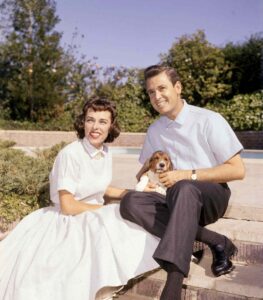
Matilda Kent Tarleton later married Louis Valandra, a tire salesman with ties to the Rosebud Sioux community. Bob Barker was reportedly around 12 or 13 years old at the time, although sources differ slightly on the exact year of the marriage. Matilda and Louis later had a son, Kent Valandra, who became Bob’s younger half-brother.
The family eventually moved to Springfield, Missouri, beginning another important stage in their lives. Bob completed high school there and later attended Drury College, which helped shape his path toward adulthood and broadcasting.
Public records confirm the basic family changes but reveal little about the private relationships within the household. The marriage should not be presented as automatic emotional recovery after widowhood or as proof of a perfect blended family. It was a new chapter that brought a different home, another child, and fresh opportunities for the family.
How Matilda Influenced Bob Barker’s Early Development
Matilda Kent Tarleton likely influenced Bob Barker through the educational environment she created around him. As a teacher, administrator, author, former debater, and university leader, she valued communication, discipline, learning, and public expression. These qualities later appeared in Bob’s calm presentation style, verbal confidence, and ability to communicate with television audiences.
However, influence is not the same as direct proof. There is no clear evidence that Matilda personally trained Bob for broadcasting or planned a career in entertainment for him. His later success also depended on his own personality, education, military service, professional experience, and opportunities.
A more responsible connection can be made through stability and education. Matilda Kent Tarleton continued working and supporting her family through widowhood, relocation, and remarriage. Her resilience and professional commitment helped provide the foundation from which Bob completed his education and eventually pursued his own career.
Rosebud Connections and the Facts About Native Identity
Matilda Kent Tarleton worked within the educational environment of the Rosebud Reservation and later married Louis Valandra, who had connections to the Rosebud Sioux community. However, available accounts describe Matilda herself as non-Native. Bob Barker’s documented Native ancestry is generally connected to his biological father, Byron John Barker, whose family had Rosebud Sioux roots.
Living, teaching, or raising a family in a tribal community does not automatically make someone an enrolled tribal member. Marriage to a Native person also does not change a person’s documented ancestry.
This distinction matters because online biographies sometimes combine residence, marriage, and ancestry into one inaccurate claim. When discussing Matilda Kent Tarleton’s Rosebud connections, terms such as Rosebud Sioux, Sicangu Lakota, and the broader historical label “Sioux” should be used carefully according to the specific source and context.
Later Years and Life With Bob and Dorothy Jo
In her later years, Matilda Kent Tarleton reportedly lived with Bob Barker and his wife, Dorothy Jo, in their Hollywood home. This arrangement reflected her continued closeness with her son and the family support available to her as she grew older.
Her later life created a notable contrast with the career she had built earlier. Matilda’s professional identity had developed in South Dakota classrooms, county education, and local history writing, while Bob’s success eventually placed the family near the centre of American television culture.
Reliable information about her health, medical care, daily routine, and level of dependence remains limited. Occasional photographs, audience appearances, or unverified captions should not be treated as complete historical evidence. Her later years are best described respectfully, without inventing private details that were never publicly documented.
The DJ&T Foundation and Her Connection to Animal Welfare
Bob Barker later established the DJ&T Foundation in memory of his wife, Dorothy Jo, and his mother, Matilda “Tillie” Valandra. The foundation supported spay-and-neuter programmes and became part of Barker’s broader commitment to animal welfare.
Matilda Kent Tarleton’s inclusion in the foundation’s name suggests that Bob associated his mother with kindness toward animals and considered that influence important enough to preserve publicly. However, the foundation was created and funded by Bob Barker after her lifetime. It was not an organisation founded, managed, or operated by Matilda herself.
There is not enough dependable evidence to describe specific rescue work, donations, campaigns, or formal activism carried out personally by her. Her connection should therefore be presented as a family influence rather than transferred into achievements that belonged to her son.
Death Records and Conflicting Online Details
Matilda Kent Tarleton died at the age of 91 in Los Angeles County, California, in February 1989. Although stronger records generally agree on the month, year, location, and her age at death, they do not consistently report the same day. Some sources list February 20, while others give February 26.
Online biographies can also create confusion by mixing her information with Dorothy Jo Barker’s death in 1981 or by repeating incorrect birth years, spouses, and family relationships.
Because the precise date remains disputed, one version should not be presented as completely settled without stronger documentation. Her cause of death is also not reliably established in the available public record and should not be guessed.
Why Matilda Kent Tarleton’s Legacy Deserves More Attention
Matilda Kent Tarleton deserves recognition for achievements that existed independently of Bob Barker’s television fame. She graduated from Dakota Wesleyan University in 1918, built a career in teaching, served as Todd County Superintendent of Schools, and wrote Our State for young readers learning about South Dakota history.
Her life also reflects the experiences of women who worked in education during the early twentieth century. She managed professional responsibilities while facing widowhood, raising children, relocating her family, and adapting to major personal changes.
Matilda should not be presented as a forgotten national celebrity or a widely influential public historian. Her impact was primarily regional and educational. That does not make it unimportant. Remembering her accurately shows how meaningful work in schools and local communities can later be overshadowed when a close relative becomes internationally famous.
Conclusion
Matilda Kent Tarleton’s life brought together education, writing, leadership, motherhood, and resilience. Bob Barker’s fame preserved interest in her name, but her graduation from Dakota Wesleyan University, leadership in Todd County schools, and authorship of Our State show that she also established a documented professional identity of her own.
Not every detail of her life can be recovered through celebrity biographies or genealogy pages. Birthplace and death-date conflicts require careful wording, while unsupported claims should remain excluded. Her most meaningful legacy rests in the educational work she completed and the stability she helped provide for her family.
Frequently Asked Questions
Who was Matilda Kent Tarleton?
Matilda Kent Tarleton was an American teacher, school administrator, author, and the mother of television host Bob Barker.
What was Matilda Kent Tarleton’s nickname?
She was commonly known as Tillie. Later records also identify her as Matilda Barker and Matilda Valandra.
When was Matilda Kent Tarleton born?
She was born on October 18, 1897. Her birthplace is generally listed as New York, although sources disagree on the precise locality.
Where did Matilda Kent Tarleton study?
She attended Dakota Wesleyan University after Arlington High School and graduated in 1918.
What did Matilda study at university?
Available university records state that she studied biology and German. She also participated in debate, student leadership, and literary activities.
Was Matilda Kent Tarleton a teacher?
Yes. She worked as a schoolteacher and later served as Todd County Superintendent of Schools in South Dakota.
What book did Matilda Kent Tarleton write?
She wrote Our State, a South Dakota history book prepared for sixth-grade students and published in 1937.
Who was Matilda Kent Tarleton’s first husband?
Her first husband was Byron John Barker, the biological father of Bob Barker.
Who was her second husband?
She later married Louis Valandra. They had a son named Kent Valandra, Bob Barker’s younger half-brother.
Was Matilda Kent Tarleton Native American?
Dependable accounts describe Matilda as non-Native. Bob Barker’s documented Native ancestry came through his biological father’s family.
Did Matilda live on the Rosebud Reservation?
She lived and worked within the Rosebud area and taught in Mission, South Dakota. Living or working in a tribal community did not make her a tribal member.
How did Matilda influence Bob Barker?
Her career in education likely created a home environment that valued discipline, learning, communication, and responsibility. However, there is no clear evidence that she specifically trained him for broadcasting.
Why was the DJ&T Foundation partly named after her?
Bob Barker established the foundation in memory of his wife, Dorothy Jo, and his mother, Matilda “Tillie” Valandra. It supported animal welfare through spay-and-neuter programmes.
When did Matilda Kent Tarleton die?
She died at age 91 in Los Angeles County, California, in February 1989. Sources disagree on whether the exact date was February 20 or February 26.
What was Matilda Kent Tarleton’s net worth?
No authoritative source has documented her income, assets, or total personal wealth. Any precise online estimate should therefore be treated cautiously.


Who Was Patrick Leno? Jay Leno’s Brother, Military Career, Family, and Legacy

Who Is Nicole Plotzker? Dr. Dre’s Ex-Wife, Children, Divorce Settlement, and Private Life

Who Is Jennifer Hageney? Andrew Shue’s Ex-Wife, Floral Design Career, Sons, and Private Life

Alix Earle Tom Brady Rumors: Dating Timeline, Party Sightings, and What We Know

Who Is Michael Galeotti? Bethany Joy Lenz’s Ex-Husband, Enation Career, Marriage, Daughter, and Private Life

Who Is Aaron Kendrick De Niro? Airyn De Niro’s Family, Identity, Career Goals, and Private Life

Who Is Lee Mack? Not Going Out, The 1% Club, Wife, Comedy Career, and Net Worth

Charlie Sheen Net Worth: How TV Millions, Taxes, and Personal Costs Reshaped His Fortune

Who Is Katherine Sanborn? Stanford Psychiatrist, Phil Hellmuth’s Wife, and Family Life

Who Is Linda Bazalaki? Miss Uganda 1993, Healthcare Career, Marriage, and Life Beyond Pageantry
Who Was Patrick Leno? Jay Leno’s Brother, Military Career, Family, and Legacy
Who Is Nicole Plotzker? Dr. Dre’s Ex-Wife, Children, Divorce Settlement, and Private Life
Who Is Jennifer Hageney? Andrew Shue’s Ex-Wife, Floral Design Career, Sons, and Private Life
Alix Earle Tom Brady Rumors: Dating Timeline, Party Sightings, and What We Know
Who Is Michael Galeotti? Bethany Joy Lenz’s Ex-Husband, Enation Career, Marriage, Daughter, and Private Life
Who Is Aaron Kendrick De Niro? Airyn De Niro’s Family, Identity, Career Goals, and Private Life
Who Is Lee Mack? Not Going Out, The 1% Club, Wife, Comedy Career, and Net Worth
Charlie Sheen Net Worth: How TV Millions, Taxes, and Personal Costs Reshaped His Fortune
Who Is Katherine Sanborn? Stanford Psychiatrist, Phil Hellmuth’s Wife, and Family Life
Who Is Linda Bazalaki? Miss Uganda 1993, Healthcare Career, Marriage, and Life Beyond Pageantry
-

 Health3 months ago
Liver Problem Symptoms in Females, Early Signs, Warning Signs, and When to See a Doctor
-

 Celebrity3 months ago
Who Is Tom Burstall? Inside the Career of Australian Film’s Quiet Force
-

 Celebrity3 months ago
List of D List Celebrities: 15 Reality Stars and Pop-Culture Personalities People Still Recognise
-
 Celebrity3 months ago
Ashley Underwood: Her Career, Marriage to Larry David, and Estimated $1 Million Net Worth